
Improving Outcomes in Psoriatic Arthritis – The HIPPOCRATES Approach
Research Background
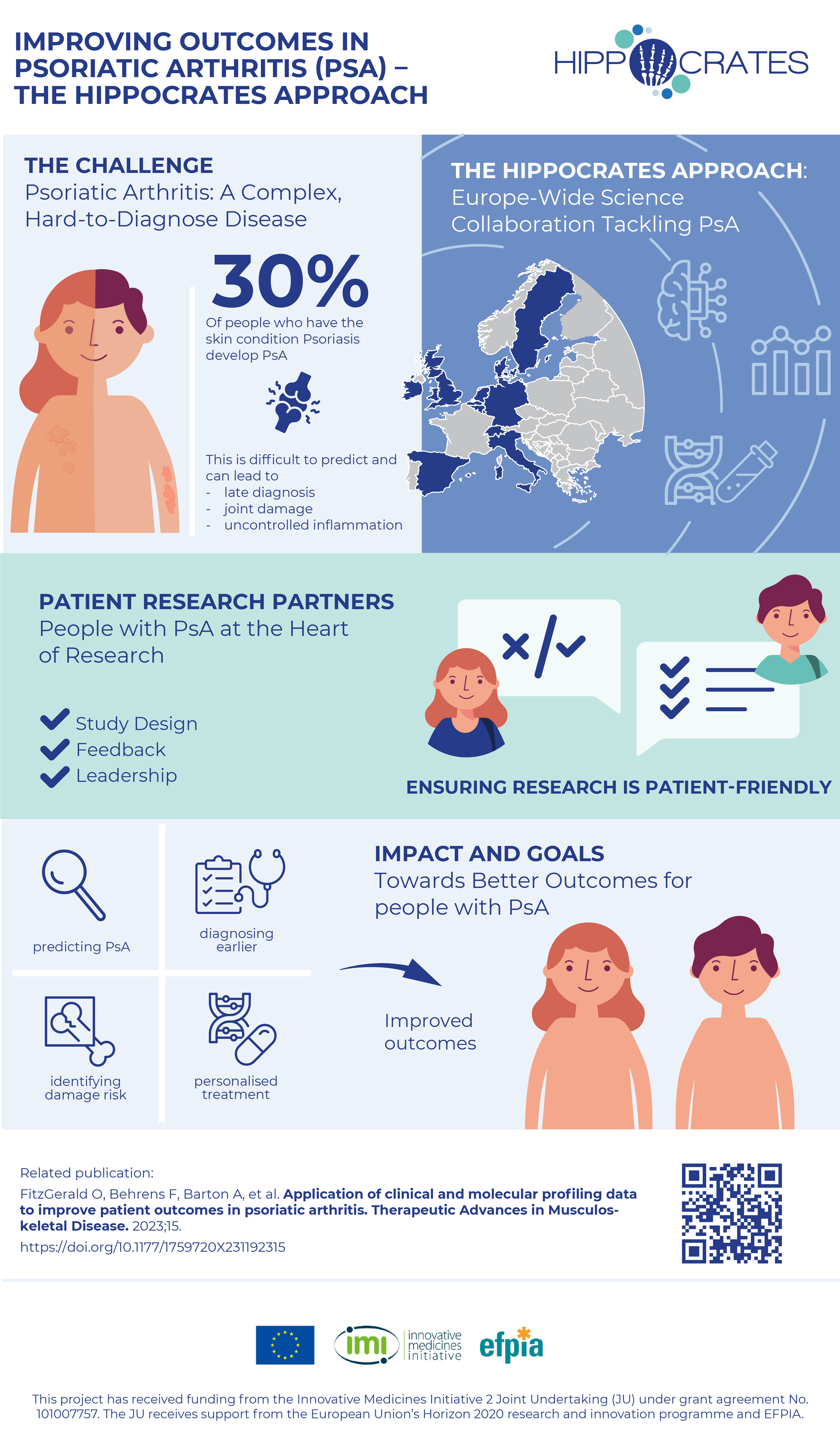
Psoriatic Arthritis (PsA) is a form of arthritis which is found in approximately 30% of people who have psoriasis. PsA has a big impact on quality of life and can be difficult to manage. Achieving a good outcome for a person with PsA is challenging by late diagnosis and because of specific symptoms that are not easy to control, in particular inflammation in the joints. Research studies from individual centres have certainly contributed to our understanding of why people develop PsA. However, to adequately address the major unmet needs of people with PsA, multi-centre, collaborative research programmes are now required.
Key Findings
This article outlines the approach of the HIPPOCRATES research team:
- The researchers are combining clinical data and biological samples (like blood) from patients across Europe to work on these challenges at a large scale.
- The focus is on using "liquid biopsies" (blood tests) instead of invasive tissue samples to make testing easier and more suitable for routine care.
- Modern technologies like genomics, proteomics, and Artificial Intelligence will be used to find markers (biological clues) that can predict disease or response to treatment.
Patients play a major role in shaping the project—they are involved in leadership, study design, and making sure research is patientfriendly.
Research Impact
It is expected that the study findings will result in earlier diagnoses and improvements in effective treatments with better outcomes for people with PsA.
View the graphical abstract for an accessible overview!
- Download the lay summary here.