
The HIPPOCRATES prospective observational study (HPOS)
Research Background
Psoriatic Arthritis (PsA) is an inflammatory disease that affects the joints and is linked to the skin condition psoriasis. Up to 30% of people living with psoriasis may eventually develop PsA, but it is often difficult to diagnose in its early stages because the first symptoms can be vague or inconsistent. As a result, treatment is often delayed until joint damage is in progress and has already permanently occurred.
About HPOS
The HIPPOCRATES Prospective Observational Study (HPOS) aims to improve the early detection of PsA. The study follows adults aged 18 years or older who have psoriasis but have not been diagnosed with PsA. Participants complete online questionnaires every six months over a three-year period, providing information about their psoriasis, lifestyle, health, joint symptoms, quality of life, fatigue, and mental wellbeing. If participants report symptoms that may indicate early signs of PsA, they are encouraged to consult a healthcare professional for further assessment. In addition, around 3,000 participants will provide a small finger-prick blood sample so researchers can investigate biological markers – tiny signs in the blood – that may help predict who is most likely to develop PsA. By combining questionnaire data, from up to 25,000 participants across 14 European countries, with biological samples HPOS aims to better understand psoriasis progression to PsA and identify those at increased risk early. Learn more: https://hpos.study/
Key Findings
As the study is still ongoing, there are no research findings to report yet. However, one important lesson is that successfully running a large online study across Europe requires a flexible approach that can be adapted to each country's needs.
Research Impact
By monitoring people with psoriasis over time, HPOS will help researchers identify the factors that increase the likelihood of developing PsA. This knowledge could support the development of a risk calculator that estimates an individual's chance of developing PsA based on their personal characteristics, symptoms, and biological markers. Earlier identification of people at higher risk could enable closer monitoring, earlier referral to specialists, and faster start of treatment before significant joint damage develops. The findings may also guide future research into strategies that could delay or even prevent the onset of PsA in people living with psoriasis. For participants, the study also provides an additional benefit by regularly checking for signs of disease progression and encouraging medical review when symptoms suggest possible PsA.
Relevance to HIPPOCRATES
HPOS is a key component of the HIPPOCRATES project, directly supporting its goals of identifying risk factors for PsA, improving early diagnosis, and monitoring disease progression.
View the graphical abstract for an accessible overview!
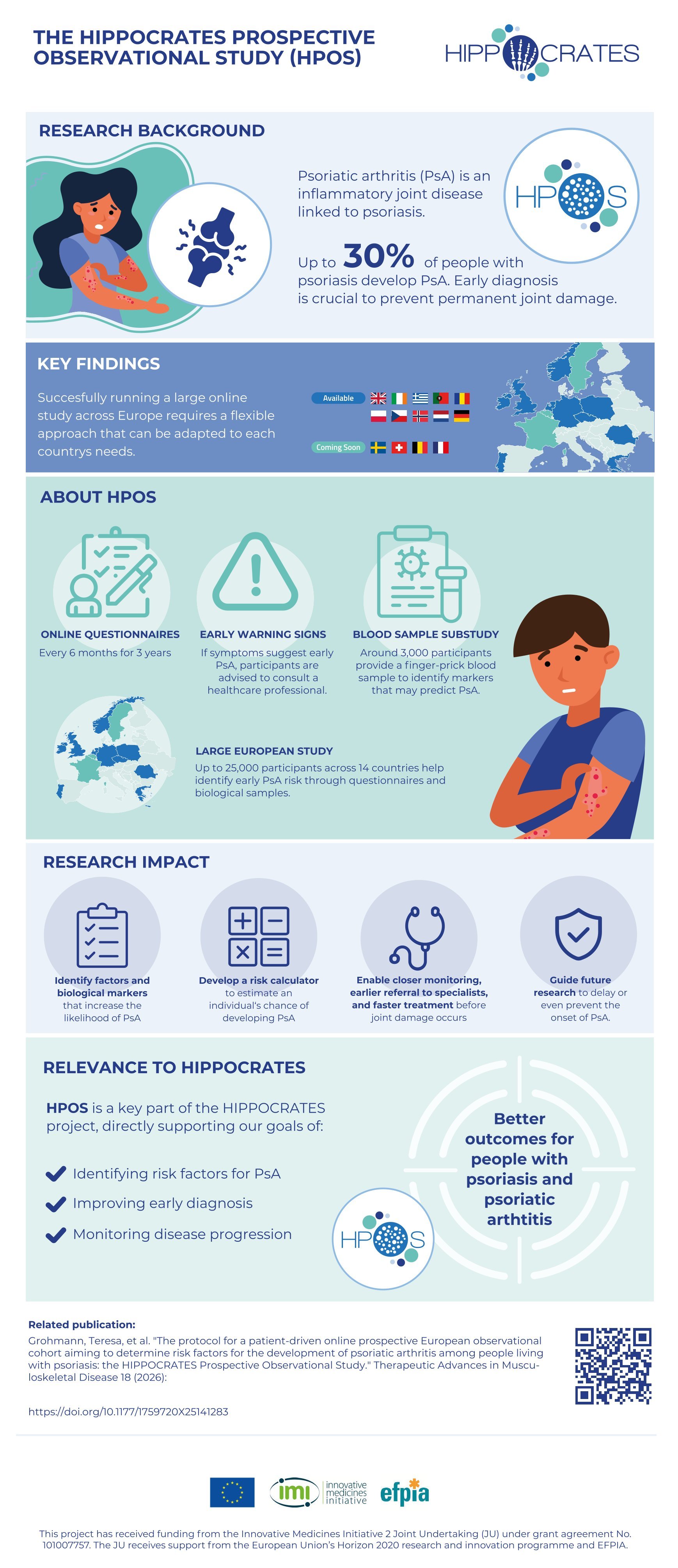
- Download the lay summary here.